International Week of Dramatherapy
This is the end of the week: International week of Dramatherapy! WOW! Having contributed my part, it suddenly feels enormous that there should be a whole week acknowledging it! The beginnings were so tentative, with small steps forwards and backwards, with the cold air of the clinician taking note or the sceptical face of the social worker deciding on death throes or the actors deciding everything was a huge joke and nothing to do with them! Could it possibly survive? Especially as none of us really knew what the definition was! What did we actually mean? Dramatherapy.
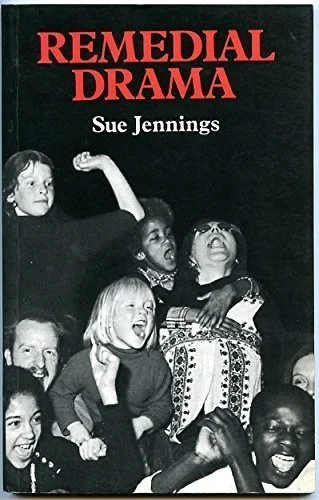
Initially we referred to it as Remedial Drama – acknowledging I suppose its roots in education. At the time it somehow felt safer. There were lots of therapies competing to get acknowledgment and status, and much of the drama work was referred to as ‘activities’. Activities were seen as a ‘good thing’ – they kept people busy and occupied and stopped too much self-regard. It had the echo of the Christian ethic, ‘Satan finds work for idle hands’. Somehow with the focus on the activity, there was a greater acceptance within clinical settings.
In special education it was seen in some schools as an important means of using up surplus energy. In one special school I was asked to teach a class as there was a shortage of enough teachers. I agreed providing they understood that I would be teaching through drama as that was the only subject I knew. We converted the classroom into a cowboy saloon, and most of the children wanted to dress up as cowboys, and then they settled down to basic subjects without any fuss. We read Spike Milligan’s nonsense verse, and they wanted to write him a letter (huge improvement already in literacy skills!). And he wrote back and asked the class to send him some of their poetry. There was no holding back as they spent a whole morning focussing on their poems – and these were children who were barely literate and considered the most remedial of all the classes! We sent a huge package of their poems to Spike Milligan and he sent a wonderful thank you and a photo for the classroom of himself as the White Rabbit – he was appearing in a Christmas show of Alice in Wonderland.
I will be writing more about the early roots of Dramatherapy in this school, but it is important to acknowledge that my own focus was not on psychiatry nor social work not special education, but the process of drama and theatre themselves. It was the art form that needed understanding in relation to healing and change. Drama may be excellent for teaching subjects, skills and self-awareness but that is different from the process of drama in healing which needs to understand and acknowledge the art form. When I was facilitating a dramatherapy training, I would go with students to the theatre several times a term, Shakespeare featured heavily in the curriculum (as it does now on the Neuro-Dramatic-Play courses), and the RSC offered quality productions as well as opportunities to visit backstage. It was following the early beginnings that we had the Dramatherapy and Shakespeare Symposium in Stratford, where we would see productions and actors would talk and run workshops. These ran for several years and gave the theatre focus of dramatherapy a major boost.
it is very different now and much of what I see in training seems closer to psychodrama. The main performance thrust of the courses are the autobiographical solo shows that are performed and assessed at the end of the training.
Our union, Equity, is supporting its members in challenging the reduced funding for theatre and also the threat from AI. It seems that the theatrical profession is always under threat – from the olden days when we were seen as itinerants, wandering the countryside, or more recently as tramps and vagabonds. There seems to be always a sub-text for actors, acting and theatre. Amazing in the moment, but not real work, not essential, and easily dismissed if there is no funding!